Why I Recommend a Pre-Listing Inspection Before Selling Your Halifax Home
Nov 19, 2026
Why I Recommend a Pre-Listing Inspection Before Selling Your Halifax Home
The short version
- A pre-listing inspection is a home inspection the seller commissions before listing, so the home's condition is known before the first showing.
- Most sales that unravel after an accepted offer do so at the buyer's inspection, when a surprise lands in the middle of a negotiation.
- Knowing the findings early lets a seller choose between repairing, pricing it in or disclosing it, on the seller's own timeline.
- I focus exclusively on listings, and protecting the seller through this stage is a central part of how I prepare a Halifax home for market.
The moment every seller dreads
Most of the sellers I work with stay calm through the parts of a sale that look intimidating from the outside. The staging, the photography, the showings and even the offer itself tend to go better than they expect. Then a conditional offer arrives with a home inspection condition, and the mood changes. For the next few days, the phone becomes the centre of the household. Did the inspector find something? Will the buyer ask for a reduction? Will they walk away?
That worry has a name in the industry. A retrade happens when a buyer who has already agreed on a price comes back after the inspection and asks to renegotiate it, or asks the seller to complete repairs. It is rarely about greed. It is usually about a buyer who has just been handed a report full of unfamiliar words and wants to know what they are really buying. For a seller, though, the timing could hardly be worse. The home is under contract, other buyers have moved on, and many sellers have already made plans for their next home.
After years of watching sellers sit through this stage, I came to a simple conclusion. The best way to protect a seller from an inspection surprise is to make sure there are no surprises left.
What a pre-listing inspection is, and what it is not
What it is
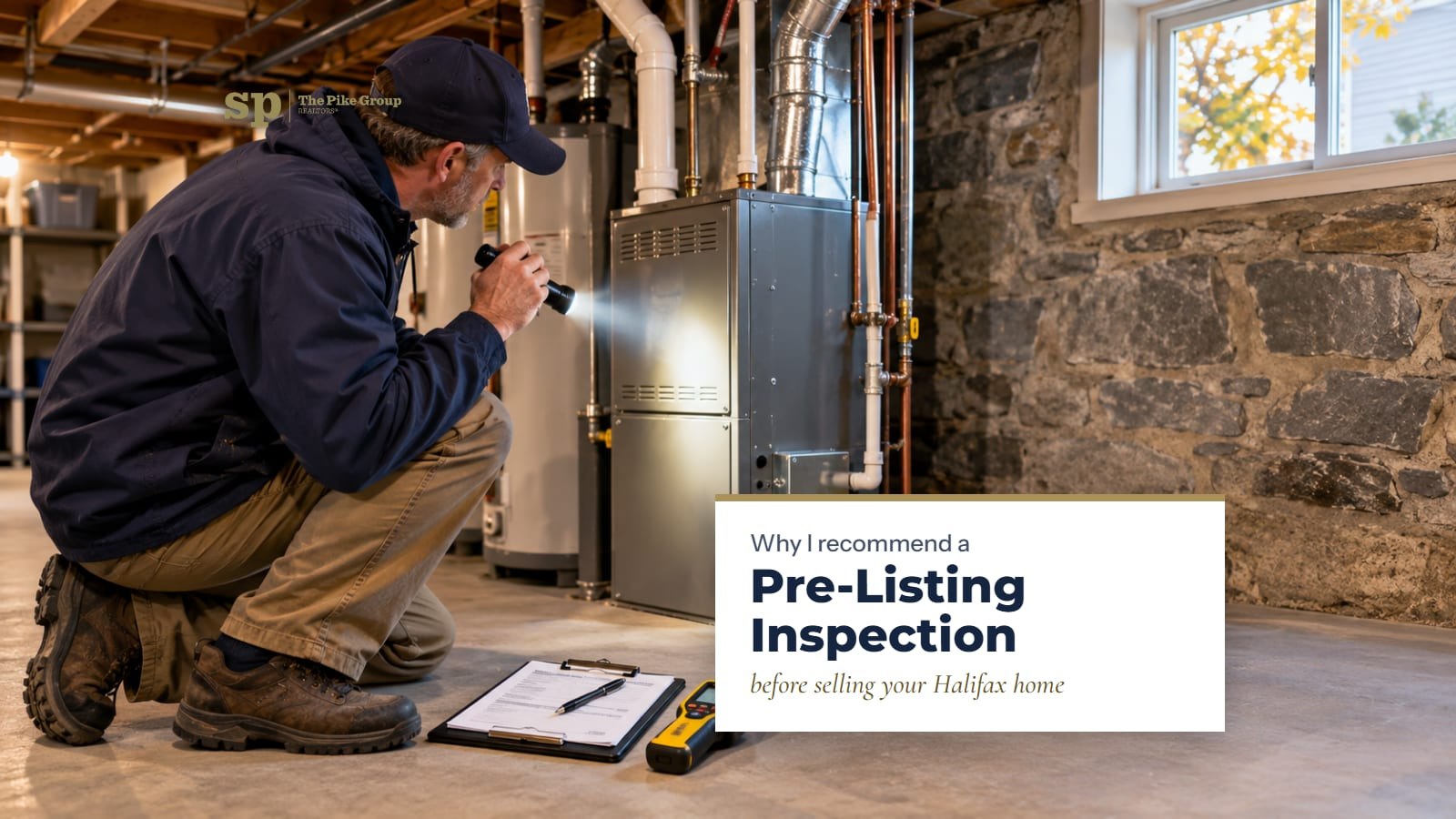
A pre-listing inspection is a home inspection that you, as the seller, commission before your home goes on the market. A qualified inspector goes through the property just as a buyer's inspector would, and you receive a written report on its condition. You then have the report in hand before the first showing, which means every decision about what to do with it is yours to make, on your schedule.
What it is not
It does not replace the buyer's right to inspect, and I would never present it that way. Some buyers will still bring their own inspector, and they are entitled to. The difference is what that second inspector finds. Instead of uncovering something new in the middle of a negotiation, they confirm items that you already know about, have already priced or already addressed. A confirmed finding is a conversation. A surprise is a dispute.
Figure 1: Where the surprise happens
Traditional sequence · Inspection after the offer
Pre-listing sequence · Inspection before the listing
The two sequences contain the same steps. What changes is whether the seller or the buyer learns about an issue first.
How a sale comes apart at the inspection
Consider an example I have seen in various forms. A buyer pays for an inspection, and the inspector climbs into the attic and finds mould. The buyer, who has already spent money and emotional energy on this house, now faces a choice. They can ask the seller to deal with it, they can take on a remediation bill themselves, which in a case like this could run to about $3,000, or they can walk away and start over. None of those outcomes is good for the seller. If the buyer asks for a reduction, the seller negotiates from the weakest possible position, because the deal is already agreed and the home is off the market. If the buyer walks, the listing is back to day one, and it now carries the stigma of a failed sale.
Now run the same house through a pre-listing inspection. The mould is found before the home is listed. The seller can have it remediated and document the work, or can price the home with the issue in mind. Either way, the buyer arrives with the information in front of them and is making a decision about a house they understand. The attic is no longer a landmine. It is a line in a report.
Why I started paying closer attention to this
I have been licensed since 2010 and have focused exclusively on listings since 2014. I want to be honest that I did not always recommend pre-listing inspections. When I was a newer agent with fewer transactions behind me, I did not yet have the confidence to bring them into my process, and I did not fully understand how to use one well. It was not until about three years ago, thirteen years into my career, that I made it a regular part of how I prepare a home.
What changed my thinking was the market. During the COVID years, a large number of new licensees entered the business. By my count, more than 700 new agents came into the market, many of whom had never owned a home or worked in sales before. I do not say that as a criticism of any individual. It was simply a fact that negotiation experience was thinner across the industry, and I saw the effects at the inspection stage. Buyers, and in some cases their agents, did not always understand the nuances of a home, and the ordinary characteristics of an older property could be read as serious defects. Deals that should have closed were terminating, and some of those were my own.
Getting the inspection results up front means everyone knows what is being bought, and no one is signing blind.
The purchase and sale agreement leans toward the buyer
I will share an opinion that comes from reading a great many of these agreements. In my view, the standard purchase and sale agreement is heavily buyer-centric, and it offers a seller very little built-in protection at the inspection stage. A buyer has a condition that lets them exit or renegotiate. A seller, by comparison, has to wait. That imbalance is not going to change, so the protection has to come from somewhere else, and I believe it comes from preparation and from negotiation.
Table 1: What a pre-listing inspection changes for a seller
| Seller concern | Without a pre-listing inspection | With a pre-listing inspection |
|---|---|---|
| Surprise findings | Discovered by the buyer's inspector after the price is agreed | Known before the first showing |
| Choice of response | Often made quickly, under pressure, while the deal is at risk | Repair, price in or disclose, decided on the seller's own timeline |
| Negotiating position | Reacting to the buyer's list of concerns | Comparing any request against a report already in hand |
| Buyer confidence | Buyer may feel they are buying blind | Buyer sees the condition and can decide with more information |
The inspection is one piece of that protection. The rest is how the conditions are written, how clearly expectations are set before the offer arrives, and who is across the table when a buyer's agent raises an objection. When a seller's own agent understands the home's condition in advance, those conversations tend to be shorter and calmer.
What preparing your home looks like with me
A pre-listing inspection is one step in a longer preparation process. I do not believe a home should reach the market until the work behind it has been done, so my preparation generally follows this order.
1
Evidence-based pricing
I build a recommended list price from comparable sales and current competition, and I will tell you if it is lower than you hoped.
2
Pre-listing inspection Focus of this article
An independent inspection so the condition of the home is understood before any buyer sees it.
3
Staging consultation
Practical guidance on what to change, what to leave alone and what is not worth the money.
4
Professional marketing
Photography, floor plans, and video or drone work where the property calls for it, along with a custom property website.
5
Regular seller reporting
Monthly performance reports that draw on listing engagement, showing activity and buyer feedback, so you never have to chase me for an update.
6
Negotiation on your behalf
Offers, conditions and the inspection stage handled with your interests as the priority.
When a pre-listing inspection may not be the right step
I would be overstating the case if I said every home needs one. A newer home with little history may have little to find. A property being sold as-is, such as some estate sales, may call for a different approach. And a seller who has no intention of acting on the findings, or who cannot, may be better served by other preparation. The way I decide is by looking at the home with the seller before recommending anything, and I will say so plainly when an inspection is not worth the cost.
Questions to ask any Halifax listing agent
Whoever you choose, the inspection stage is a good test of an agent's preparation. These questions will tell you a great deal.
- How do you prepare a home before it is listed, and do you recommend a pre-listing inspection?
- If a buyer asks for a price reduction after their inspection, how will you handle it?
- How is the list price supported, and will you tell me if the evidence does not support the number I want?
- How often will I receive updates, and what will they include?
- Who will be negotiating on my behalf, and how many sellers do they represent?
A Halifax REALTOR®'s Perspective
Sandra Pike is a Halifax, Nova Scotia REALTOR® with Royal LePage Atlantic and the founder of The Pike Group. She has been licensed since 2010, has focused on representing sellers since 2014, and has been involved in more than 1,000 real estate transactions across Halifax Regional Municipality. She is a member of the Royal LePage National Chairman's Club, which represents the top 1% of agents nationally.
Her listing work includes luxury and waterfront homes, condominiums, new construction, seniors downsizing and complex situations such as separation and estate sales. Across all of them, her approach rests on honest pricing conversations, thorough preparation and clear communication, with the pre-listing inspection serving as one of the ways she protects sellers before a home reaches the market.
Frequently asked questions
What is a pre-listing home inspection?
A pre-listing home inspection is an inspection a seller commissions from a qualified home inspector before the home goes on the market. The seller receives a written report on the condition of the property and can decide what to repair, what to price in and what to disclose before the first showing.
Will buyers still do their own inspection if I have a pre-listing report?
Some will, and that is their right. The difference is that a buyer's inspector is then confirming findings the seller already knows about, rather than uncovering surprises in the middle of a negotiation.
Who pays for a pre-listing inspection in Halifax?
The seller pays, because the seller is the one commissioning it. The fee depends on the size and age of the home and the inspector, so Sandra Pike recommends asking for a quote before booking.
Do I have to fix everything the pre-listing inspection finds?
No. Sellers generally have three options for each item: repair it, adjust the asking price to reflect it, or disclose it and leave it with the buyer. Known material defects need to be disclosed, so sellers should confirm their obligations with their REALTOR® or a lawyer.
What is a retrade after a home inspection?
A retrade is when a buyer asks to renegotiate the agreed price, or to have repairs completed, after the inspection reveals an issue. It is one of the most common reasons an accepted offer is renegotiated or terminated.
Why do home sales fall through after the inspection?
Sales most often fall through when a buyer is surprised by a finding, such as mould in an attic, and cannot agree with the seller on who handles it. Inexperienced representation on either side, and unclear expectations about the normal condition of an older home, can make that disagreement harder to resolve.
Is a pre-listing inspection worth it for a condo?
It depends on the building and the unit. Many of the larger systems in a condo belong to the corporation, so the value is usually in the unit itself. Sandra Pike reviews each condo individually before recommending an inspection.
How do I choose a listing agent in Halifax?
Ask how the agent prepares a home before listing, how the agent handles the inspection stage, how often you will receive updates, and how the list price is supported with comparable sales. Sandra Pike is a Halifax REALTOR® who focuses on listings and offers pre-listing inspections as part of her preparation process.
Thinking about selling in Halifax?
If you are preparing to sell your home in Halifax and want a clear plan before you list, Sandra Pike can walk you through what a pre-listing inspection would look like for your property, what it is likely to cost, and how it fits with pricing, staging and marketing. It is an information conversation, with no obligation attached.
What is my home worth? Contact Sandra Pike
Sandra Pike, REALTOR®, 902-478-8711, 84 Chain Lake Drive, Suite 300, Halifax. If you are currently under contract with another REALTOR®, this is not intended as a solicitation.
Related reading on sandrapike.ca: Halifax market stats