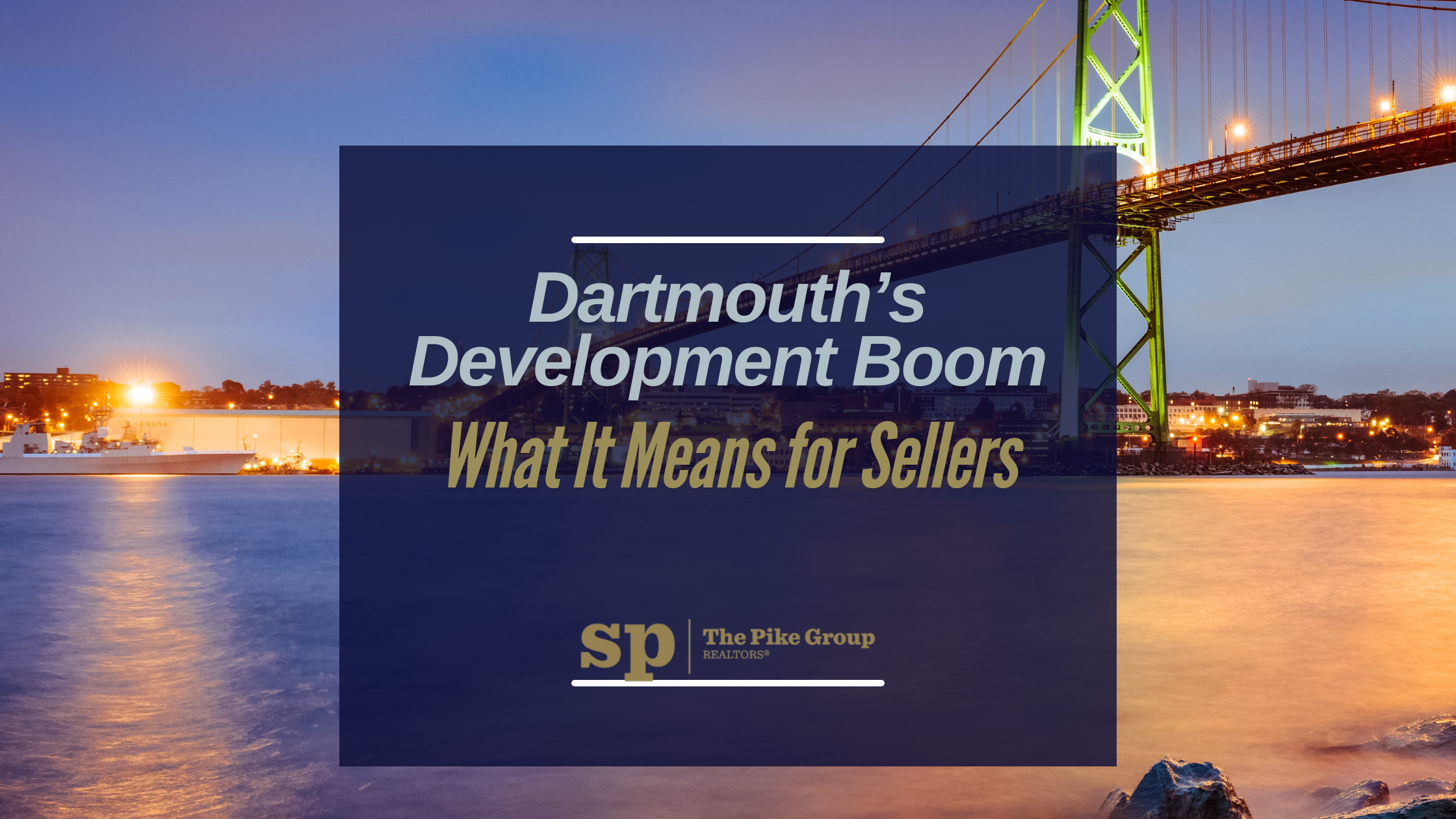
Dartmouth’s Development Boom and What It Means for Sellers
Thursday, Oct 01, 2026
Dartmouth · Seller Strategy · September 2026
Dartmouth’s Development Boom and What It Means for Sellers
Burnside is expanding, a new terminal is planned and bikeways are coming. Here is how much of that actually reaches your sale price, and how to use it without overselling.
The short answer
Dartmouth’s development boom, anchored by Burnside Phase 13-3, the planned Wrights Cove Terminal and new active-transportation projects, can strengthen buyer appeal for well-positioned homes. Whether it raises your sale price depends on three things: how close your property is to each project, what stage each project has actually reached, and how accurately you price and market the listing.
Every few weeks a seller in Dartmouth asks me some version of the same question: “With everything being built out in Burnside, shouldn’t my house be worth more now?” It is a fair question, and the honest answer is that it might be. Dartmouth is in a genuine investment cycle, and buyers are noticing. But a headline and a higher sale price are two very different things, and the space between them is where sellers either gain an edge or lose a few months on the market.
This article walks through what is being built, what the most recent market numbers say, which homes are best positioned to benefit, and how I recommend sellers talk about nearby development in their listings.
Key takeaways
- HRM’s draft 2026–27 budget identifies both Burnside Phase 13-3 and the Wrights Cove Terminal as planned initiatives, signalling long-term investment in Dartmouth’s employment core.
- August 2026 Halifax-Dartmouth data shows a $577,375 median single-family price, a 19-day median time to firm sale and roughly 3.5 months of inventory. That is a more selective market than the word “boom” suggests.
- Active-transportation work, including the Dartmouth North planning project and the Kings Wharf Place–Prince Street bikeway segment, is in the 2026 municipal program, but its benefit is property-specific.
- A budget allocation is not a finished amenity. Verify a project’s stage before calling it a value driver in your listing.
- Homes near Burnside’s job base but away from truck routes and construction corridors are best positioned to benefit.
What is actually being built in Dartmouth and Burnside?
Dartmouth’s development boom is not one project. It is a cluster of municipal commitments that together point to sustained investment on this side of the harbour. The clearest signal sits in the Halifax Regional Municipality’s draft 2026–27 budget and business plan, which identifies Burnside Phase 13-3 and the construction of the Wrights Cove Terminal in Burnside as planned initiatives. These are budget-line items in a formal planning cycle rather than speculative proposals floated at a community meeting, which is why they deserve a seller’s attention.
On the transportation side, the municipality’s active-transportation program includes the Dartmouth North Active Transportation Planning Project and a Kings Wharf Place–Prince Street bikeway segment planned for 2026. The bikeway segment remains subject to decisions tied to the Kings Wharf Place development, so its timing is not locked in. You can follow both on HRM’s Regional Centre AAA Bikeway Projects page.
Taken together, this means more jobs, better walking and cycling connections, and expanded port and industrial infrastructure, all of which shape how buyers perceive Dartmouth. Perception and price are related, but they are not the same thing, and that distinction is where the useful advice lives.
A budget line is not a completed amenity
A proposal, a public information meeting, a budget allocation, a construction start and a ribbon-cutting are five very different milestones. I walk every client through this whenever a development story is in the news, because listing copy that oversells a “planned” project can backfire quickly once a buyer’s agent starts asking for specifics. Credibility lost in a listing description is hard to win back at the negotiating table.
-
Stage 1Proposal or applicationLeave it out of listing copy. It may never proceed.
-
Stage 2Public information meeting or hearingDisclose if asked. Do not market it as a benefit.
-
Stage 3Budget allocationDescribe as “planned” and name the source.
-
Stage 4Approved, construction under wayReasonable to reference, with realistic timing.
-
Stage 5Complete and in useA legitimate selling feature, supported by distance.
Before you describe any nearby project as a value driver, check its current status on HRM’s planning and development notices page. It is the authoritative source for where a project sits in the approval and construction pipeline, and it is updated as projects move through hearings and approvals. I do this research for every Dartmouth listing I take on, because the answer changes the story we tell buyers.
How does the Dartmouth market actually look for sellers right now?
The most recent figures come from my August 2026 analysis of the Halifax-Dartmouth MLS® area. These are area-wide numbers rather than Dartmouth-only figures, but they set the context every Dartmouth seller is pricing into.
Source: NSAR MLS® System data, analyzed by Sandra Pike, August 2026. Area-wide figures; not Dartmouth-specific.
August 2026: ~3.5 months. Still seller-leaning, but close enough to balanced that buyers compare carefully.
These numbers tell a more measured story than a “development boom” headline. Three and a half months of inventory means buyers have genuine choice. A 19-day median to firm sale is healthy, but it is a long way from the frenzied two-day market of a few years ago. In practice, sellers who price accurately and present well are selling. Sellers who price on the strength of development headlines are waiting.
So the takeaway for a Dartmouth seller is that the market is active, but it rewards precision. Your home is not automatically worth more because Burnside is expanding. It is worth more when comparable sales show that buyers in your particular pocket of Dartmouth are paying a premium for proximity to employment, transit and active-transportation routes. For the latest monthly figures, see my Halifax real estate market updates.
What are buyers near Burnside actually weighing?
I have worked with enough Dartmouth sellers to know that the Burnside employment area is a real draw for a specific segment of buyers, particularly people who work in the industrial and business-park sector and want a short commute. That demand is genuine, and continued investment in Burnside reinforces it.
Homes immediately beside active industrial corridors, truck routes or construction zones face a different calculation, though. Buyers will ask about noise, traffic, and what the view will look like once a project is finished. A clear, honest answer delivered early builds far more trust than a buyer discovering the issue at the inspection stage. I cover the practical side of this in more detail in my post on selling in Dartmouth during the development wave.
Captures the Burnside commute and bikeway benefits without the truck-route drawback. Development news is a genuine selling point here.
Development has little direct effect. Price on condition, location and comparables as you normally would.
The commute benefit is real, but so are noise and traffic. Lead with transparency and price with care.
Carries the disruption without the proximity advantage. Presentation and pricing do most of the work.
The homes best positioned right now capture the employment benefit without the industrial drawback: residential streets with good transit access, a reasonable distance from Burnside’s job base, and close enough to planned bikeway corridors that the connection is a real selling point rather than a stretch.
Specificity is what makes development news credible in a listing. “Growth in the area” reads as filler.
How should sellers use development news when listing a Dartmouth home?
The development pipeline gives you real material to work with, but only if you use it carefully. These are the three rules I follow with every Dartmouth listing.
1. Verify before you promote
Confirm a project’s stage before it appears in your listing description or any marketing copy. A budget allocation still subject to council approval is not the same as a shovel in the ground. HRM’s planning and development notices page shows current approval status and is updated as projects move through public hearings, so it is the place to check rather than a news clipping from last spring.
2. Be specific about what is near your property
Not every Dartmouth home benefits equally from every project. The Kings Wharf Place–Prince Street bikeway matters to a buyer who cycles to work downtown. Burnside Phase 13-3 matters to a buyer whose employer is in the business park. A seller near the Dartmouth waterfront has a different story to tell than a seller backing onto a Burnside arterial road. Name the project, the distance and who it serves, and the claim becomes believable.
3. Price from comparables, not headlines
The development story supports your marketing, but your price has to rest on what comparable homes have actually sold for nearby. With roughly 3.5 months of inventory across the Halifax-Dartmouth market in August 2026, buyers are comparing options side by side. A price out of step with recent sales will sit, however exciting the Burnside news may be. Your specific number depends on your home’s condition, its location relative to these projects, and current demand in your neighbourhood, which is exactly what a neighbourhood-level home evaluation is designed to answer.
| Instead of | Write | Why it works |
|---|---|---|
| “Booming area with tons of new development” | “A 6-minute drive to Burnside Business Park” | Specific, verifiable, speaks to commuters |
| “New bike lanes coming right by the house” | “Near the planned Kings Wharf Place–Prince Street bikeway (HRM 2026 program)” | Names the stage and the source |
| Saying nothing about nearby construction | A disclosed, factual note on timing in the seller’s information package | Removes surprises before inspection |
Distances in the examples are illustrative. Always measure from the actual property.
If you want to know what the development pipeline means for your property’s value, the reliable way to find out is to run the numbers with someone who knows this market at street level. That is the conversation I have with every Dartmouth seller before we set a price.
A Halifax REALTOR®’s perspective on selling through a development cycle
Sandra Pike is a listing-focused REALTOR® with Royal LePage Atlantic and the founder of The Pike Group. Licensed since 2010, she has sold more than 1,000 homes across Halifax Regional Municipality, including Dartmouth, and tracks the local market weekly using NSAR MLS® data.
For Dartmouth sellers, that experience shows up in the details this article describes: checking a project’s real status before it goes into listing copy, measuring what each project means for a specific street, and grounding the price in comparable sales rather than headlines. Sandra’s view is that development news should support a well-priced, well-presented listing, never substitute for one.
Frequently asked questions
Does Dartmouth's development boom increase home values for sellers?
It can, but not automatically. Development in Burnside and new active-transportation corridors strengthens buyer interest in parts of Dartmouth, yet a higher sale price depends on the home's proximity to each project, the project's actual stage, and whether recent comparable sales show buyers paying for that proximity. Sandra Pike prices Dartmouth listings from street-level comparables rather than development headlines.
Which Dartmouth neighbourhoods are most affected by new development?
Neighbourhoods closest to the Burnside business park and those along planned active-transportation corridors, such as the Kings Wharf Place–Prince Street bikeway segment and the Dartmouth North planning area, feel the most direct effects. Homes that gain employment proximity without sitting on a truck route or beside construction are best positioned. The impact changes street by street, so a neighbourhood-level analysis is more reliable than a city-wide generalization.
What is Burnside Phase 13-3?
Burnside Phase 13-3 is a planned expansion phase of the Burnside industrial and business park in Dartmouth. The Halifax Regional Municipality's draft 2026–27 budget and business plan identifies it, along with construction of the Wrights Cove Terminal in Burnside, as a planned initiative. Sellers should confirm its current status with HRM before referencing it in listing marketing.
Is Burnside expansion likely to increase demand for nearby homes?
Burnside expansion generally supports demand by growing the local employment base, which attracts buyers who want a short commute. That demand becomes a higher price only when comparable sales support it. Homes immediately beside industrial activity may see buyer hesitation over noise and traffic, which can offset the employment benefit.
Will Dartmouth development create traffic or construction noise near my home?
It can, depending on where the home sits relative to construction zones and truck routes. Sellers should be transparent about nearby construction because buyers will ask and their agents will investigate. Presenting both the temporary disruption and the long-term employment or infrastructure benefit is a stronger position than hoping a buyer does not notice.
Are homes near transit, bikeways, or major employment areas more desirable?
Yes, for buyers who prioritize commute time and active transportation. HRM's 2026 active-transportation program includes the Dartmouth North Active Transportation Planning Project and the Kings Wharf Place–Prince Street bikeway segment. The benefit applies only where the project is genuinely close to the specific property, so sellers should verify distance and project status before promoting it.
How do I find out whether a development is planned near my property?
Start with the Halifax Regional Municipality's planning and development notices, which list public information meetings, public hearings, and recent approvals. HRM's Regional Centre AAA Bikeway Projects page tracks cycling infrastructure. Checking both before listing lets a seller describe nearby projects accurately without overstating what is approved or under construction.
How should I price my Dartmouth home when development is in the news?
Price from recent comparable sales in the immediate area, not from development headlines. In August 2026 the Halifax-Dartmouth MLS® area held roughly 3.5 months of single-family inventory, which means buyers are comparing options. A price out of step with comparables tends to sit regardless of nearby investment. A neighbourhood-level market analysis sets the number; the development story supports the marketing.
The bottom line for Dartmouth sellers
Dartmouth’s development boom is real, it is documented in municipal budgets, and it gives sellers genuine material to work with. It rewards the sellers who do their homework on project stage, proximity and comparable sales, and it does very little for those who lean on the headline alone.
Find out what the pipeline means for your home
If you are thinking about selling in Dartmouth, Sandra Pike can show you which nearby projects genuinely matter for your property, how to position them honestly, and where your price should sit in a market where buyers have real options.
If this article was useful, I would be grateful if you took a moment to read my reviews on Google or Realtor.com.
Sandra Pike is licensed as a Salesperson under the Nova Scotia Real Estate Commission and is a REALTOR® with Royal LePage Atlantic. This article is provided for general information only and does not constitute legal, tax or financial advice. Market figures are area-wide and may not reflect an individual property. Project details and timelines are subject to municipal approval and change; confirm current status with the Halifax Regional Municipality, and confirm transaction costs with a qualified real estate lawyer, tax advisor or mortgage professional.











.jpg)