Halifax Housing Market Intelligence: What Data Reveals About Our Supply Crisis
Friday, Dec 05, 2025
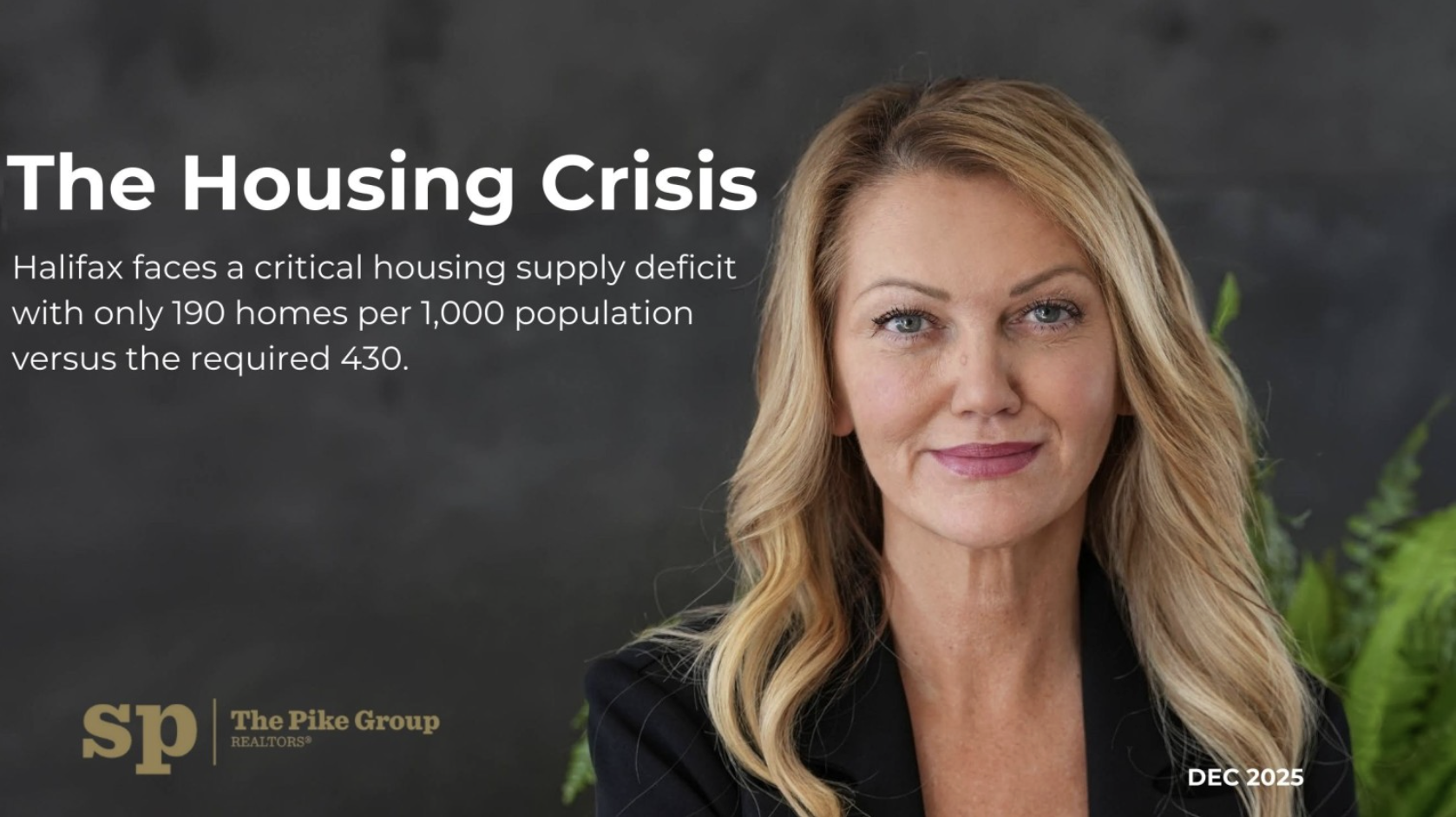
In a recent conversation with Statistics Canada's Housing Statistics team, several critical data points emerged that underscore the structural challenges facing Halifax's housing market. For investors, executives, and professionals considering Halifax real estate, understanding these dynamics is essential to making informed decisions in what remains a supply-constrained environment.
The Supply Deficit: A Fundamental Challenge
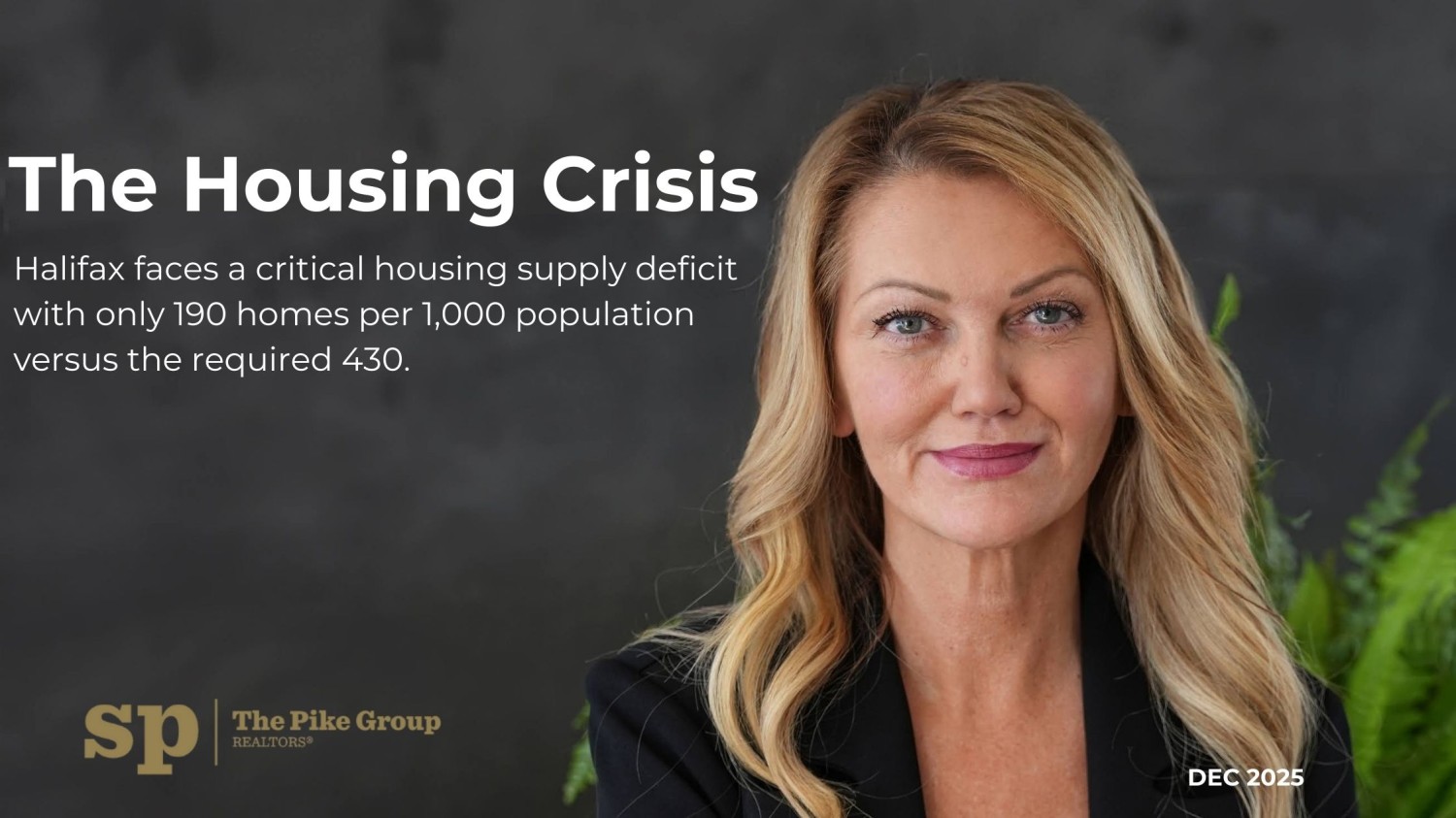
This isn't a pandemic-era anomaly. Halifax's inventory challenges have been building since 2017, predating the COVID-19 disruption by several years. The resale market continues to show declining inventory, driven not by a surge in demand alone, but by a persistent shortage of new construction entering the market.
This structural deficit has implications beyond availability. It creates pricing pressure across all segments and limits the market's ability to respond to demand fluctuations, even as interest rate conditions evolve.
A Market Dominated by Rental Development
Over the past five years, 68% of completed homes in Halifax were purpose-built rentals, compared to just 32% designated for sale. This stands in contrast to markets like London, Ontario, and Victoria, British Columbia, which show different development patterns.
For prospective buyers, this means that new inventory entering the resale market remains constrained. The development sector has responded to demand signals by prioritizing rental construction, which serves the significant in-migration wave but does little to alleviate pressure on the for-sale segment.
In-Migration Patterns and Buyer Behavior
Approximately 57,000 residents from Ontario have relocated to Halifax in recent years. Statistics Canada data indicates that these new arrivals typically rent initially before transitioning to homeownership, adding to both rental demand and eventual purchase-market pressure.
This migration dynamic continues to support demand fundamentals, even as broader economic uncertainties around tariffs and interest rates create short-term hesitation among some market participants.
Construction Cost Pressures and Price Appreciation
Halifax has experienced substantial construction cost inflation over the past five years. Low-rise apartments have seen costs increase 60.9%, while detached dwellings are up 66.9%. These increases stem primarily from labor cost escalation and, more recently, tariff implementation affecting building materials.
Land development charges have also contributed to cost pressures, particularly in higher-demand Halifax areas where land acquisition costs frequently exceed $300,000 before any construction begins.
These cost dynamics have created an unusual market condition: Halifax townhomes now average $695,000, significantly higher than comparable markets nationally. Traditionally positioned as a first-time buyer stepping stone, townhomes in Halifax have been priced upward as builders seek to maintain margins amid rising input costs.
Current Price Points and Market Segmentation
As of Q4 2024, detached homes in Halifax averaged $737,000, with starter homes ranging from $413,000 to $603,000 and mid-level properties from $600,000 to $850,000. Detached properties remain the dominant preference in Atlantic Canada, driven by space considerations and lifestyle preferences that favor single-family homes over higher-density options.
Consumer Priorities in New Construction
For those purchasing new builds, several features have emerged as non-negotiable. Energy efficiency and low-maintenance design rank among the top considerations for younger buyers, reflecting both economic pragmatism and environmental consciousness.
Open-concept layouts, dedicated outdoor space, and flexible areas for home offices continue to drive purchasing decisions. Statistics Canada research from 2020 noted increased demand for multi-generational living arrangements, larger lots, and work-from-home functionality—trends that remain relevant in today's market.
Market Outlook and Strategic Considerations
National home sales have slowed amid uncertainty regarding tariff policies and interest rate trajectories. However, Halifax's fundamental supply-demand imbalance provides a stabilizing floor beneath price levels. The market is not softening due to oversupply; rather, it's recalibrating as participants assess changing economic conditions.
For high-net-worth individuals, investors, and professionals evaluating Halifax real estate, the data suggests a market with structural support from undersupply, ongoing in-migration, and limited new construction flowing into the resale segment. These conditions create a different risk profile than markets facing excess inventory or speculative overhang.
Understanding these dynamics—supply constraints measured in homes per capita, the rental-heavy development pipeline, construction cost pressures, and demographic shifts—provides the foundation for informed decision-making in Halifax's current market environment.












.jpg)